
There is no question that Colorado State University is a photogenic campus. Fort Collins is a beautiful place to take photos, which is why students love to take selfies on campus. Chances are, every selfie has something beautiful in the background that represents Colorado or CSU. If students need an idea of where to take a perfect selfie, here are some options.
“It’s hard to take a bad picture over there,” John Cline, CSU photographer, videographer and CSU a Social Media team member, said of the CSU Trial Gardens, which is outside the University Center for the Arts. Cline shared some of the spots he likes to use as backdrops for his photos around campus.
1. Admin Building
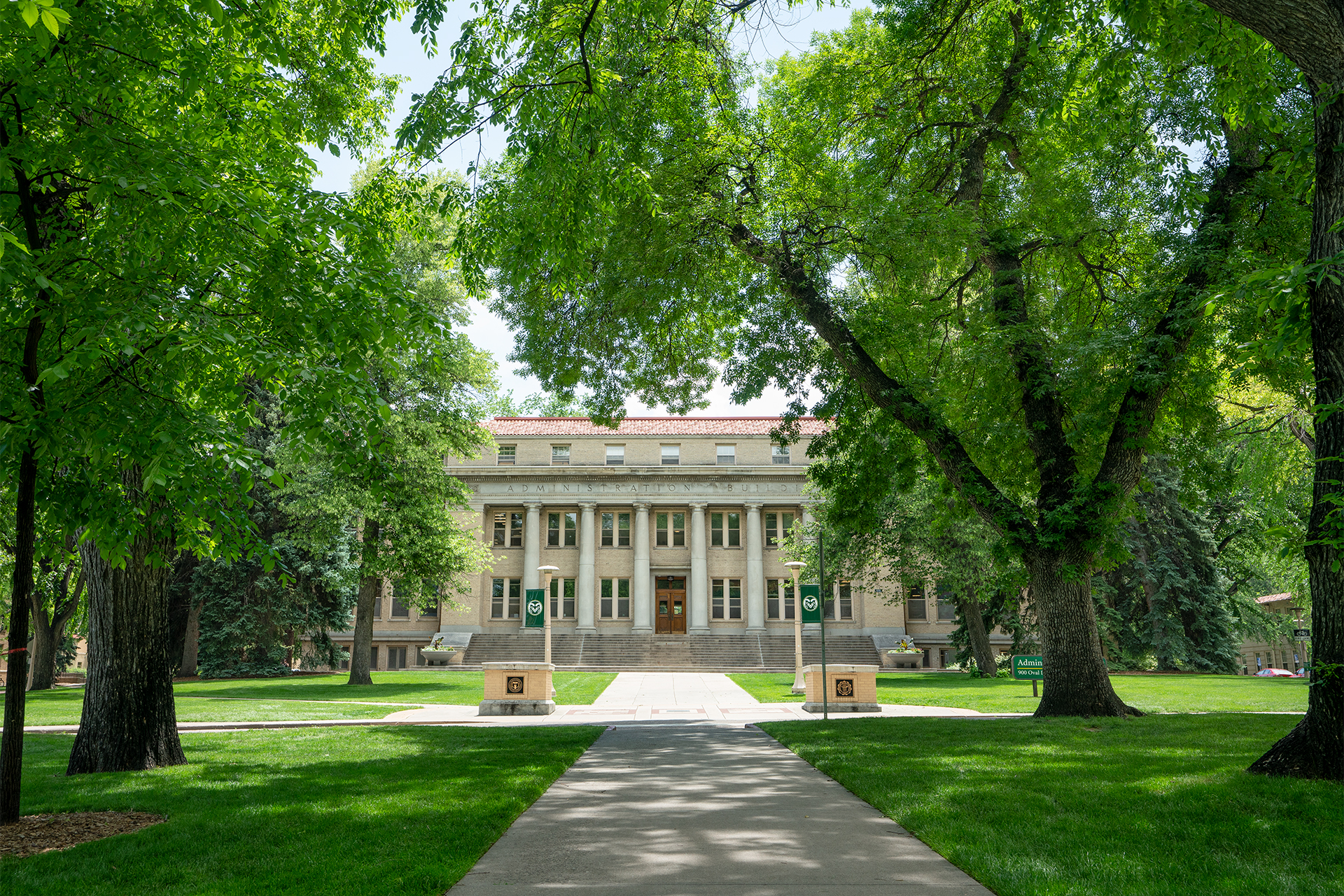
Located in the heart of the Oval, the Administration Building steps are one of the top spots to take selfies. Not only are the stairs visually appealing, but the building itself has courthouse-esque features that make for some great photos.
2. Pick a tree
Not much can beat the greenery at CSU. There are countless trees on campus, and any of them make for a beautiful selfie. Fall in Fort Collins is like no other; from the brightly colored trees to all the leaves on the ground, there is no going wrong with a selfie in front of a tree.
3. The Trial Gardens

A lesser known beauty, the Trial Gardens are nothing short of incredible. Its main purpose is for horticultural research, the breeding of flowers and the horticulture students to learn from. But all of the plants and flowers in this garden are eye-catching and will make for a beautiful background of a selfie.
4. Find the action
Just like all college campuses, CSU always has something going on. Whether it is something in the plaza of the Lory Student Center, or even just a class event, you just have to find the action. With the large amount of events happening on campus daily, you’re sure to find something going on that is worth documenting with a selfie.
5. Canvas Stadium during a football game

Canvas Stadium’s energy and imagery during a football game is almost unbeatable. As one of the top college events, a football game is going to be a great place to take a selfie. Especially when it comes to campus spirit wear during football games, a selfie during the games is going to be one you want to keep forever.
6. The Oval
The Oval is one of the most gorgeous places on campus. Lined with trees and older buildings, you cannot go wrong with a selfie from anywhere in the Oval. “If you want something that’s very CSU, it doesn’t get more iconic than the Oval,” Cline said.
7. Any ram statue
There are five bronze ram statues around campus, all big enough to tower over the picture taker. Head on over to Moby Arena, Canvas Stadium, the CSU Health and Medical Center, the CSU Energy Institute or the Student Recreation Center to snap a selfie with any of the five bronze ram statues.
8. Find CAM the Ram (mascot or animal)

CSU wouldn’t be the same without CAM the Ram. Both the two-legged mascot and the animal can be found before and after games, and they occasionally wander campus. The real animal CAM is always accompanied by his handlers, but chances are, if you ask nicely you can snap a selfie with the iconic ram.
9. CSU Lagoon
Located right near the Lory Student Center, the CSU Lagoon often houses geese and other birds. The beauty of the rocks and greenery along the edges also contributes to making the lagoon a great spot to take a selfie.
10. Take a hike to the ‘A’
A common activity for any CSU Ram is taking a hike to the white “A” on the side of a hill directly uphill from the old Hughes Stadium. The “A,” which stands for “Aggies,” is a symbol that CSU will always be an agricultural school. So go head up the hill and snap a selfie with the big white “A” so you can check it off of your list.